
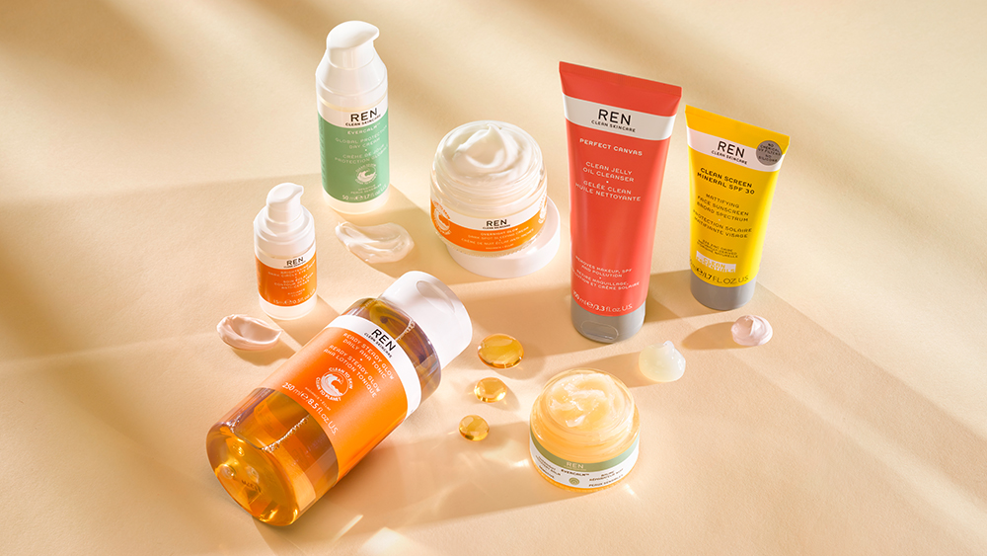
The beauty industry is changing faster than ever. What once made brands stand out is now expected! Today, sustainable competitive advantage is increasingly shaped by scientific depth, clinical validation, and robust data infrastructure.
But here’s where things started to change. As “clean” and “natural” claims shifted from differentiation to standard practice, REN clean skincare found it challenging to evolve beyond its founding value proposition. The challenges become clear:
- Too many products
- Slow innovation
- Weak differentiation
Together, these challenges limited the brand’s ability to justify continued strategic investment or attract a consumer interest.
For beauty executives and investors, the strategic implication is clear: long-term advantage now depends on moving beyond foundational sustainability narratives. Leading players are building defensible growth platforms through biotechnology-enabled efficacy, AI-driven personalization, regenerative supply architectures, and innovation aligned with longevity and performance outcomes.
What really led to REN skincare closure?
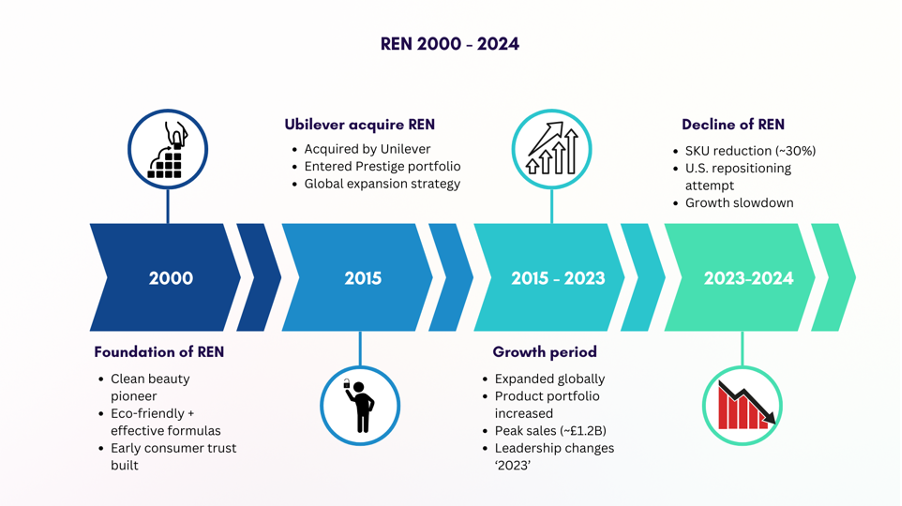
2000: REN entered the market with a bold promise
In 2000, REN Skincare was founded in London by Rob Calcraft and Antony Buck with a clear vision — to create skincare that avoided harsh chemicals while still delivering effective results.
At a time when “clean beauty” wasn’t yet mainstream, REN stood out by combining eco-friendly ingredients with performance-driven formulations. This approach resonated with consumers looking for safer, more sustainable skincare, helping the brand build early trust and loyalty.
May 2015: Strategic Acquisition by Unilever
This was a big bet on clean beauty going global. Unilever acquired REN Clean Skincare and integrated it into its Prestige portfolio, alongside brands such as Dove. The strategic intent was clear: accelerate global expansion, particularly in the United States, and scale distribution through a larger commercial platform.
2015–2023: Expansion and Commercial Peak
On the surface, everything looked like success. Under leadership that included Vasiliki Petrou within Unilever’s Prestige division, REN Clean Skincare pursued geographic expansion and portfolio broadening. The brand scaled distribution, entered new markets, and diversified product offerings, reaching peak reported sales of approximately £1.2 billion by 2023. This phase represented the commercial high point of the brand’s growth trajectory.
Late 2023: Organizational Restructuring and Operational Strain
Following leadership changes, and internally, things started to shift. Unilever initiated workforce reductions and organizational restructuring. There were indications that operational instability coincided with declining commercial performance, limiting the organization’s ability to respond effectively to emerging market pressures.
Late 2023–2024: U.S. Market Repositioning Attempt and Strategic Misalignment
In response to slowing performance, the company rationalized its portfolio, reducing SKUs by roughly one-third and prioritized renewed expansion in the U.S. market. However, the repositioning faced multiple structural challenges:
- Pricing misalignment: Positioned above mass market but without sufficient premium differentiation.
- Erosion of differentiation: “Clean” positioning had become category standard rather than distinctive.
- Innovation gap: Limited participation in fast-growing domains such as AI-enabled personalization and microbiome-based skincare.
- Brand credibility pressure: Packaging decisions perceived as less environmentally aligned weakened the core sustainability narrative.
- Scale limitations: Annual sales remained below €50 million, constraining competitive leverage against larger prestige players.
Collectively, these actions did not materially improve profitability and instead reinforced the REN skincare closing trajectory.
Market Evolution: How Competitors Are Differentiating
Clean is now the baseline, not the advantage “free-from” positioning created a powerful entry point but today, those claims are largely commoditized, despite historically strong REN skincare reviews from loyal consumers. Consumers are more informed and more skeptical. At the same time, higher customer acquisition costs, retail normalization, and intensifying competition have made profitable scaling far more difficult, particularly for independent clean brands.
This isn’t a slowdown. It’s a complete structural reset.
While REN slowed down, competitors moved fast. They are recalibrating their growth architecture across these structural dimensions:
- AI-driven skincare and diagnostics
- Biotech-based ingredient innovation
- Hyper-personalized beauty solutions
| Company | Strategic Initiative | Investment / Acquisition | Strategic Rationale & Result |
 |
Green Sciences & Biotech | Investment in Geno (Genomatica) and partnership with Microphyt (2023–) | Rationale: Moving from “extracting nature” to “engineering nature.”
Result: Launch of biotech-based ingredients that offer sustainable sourcing without efficacy trade-offs. 95% of ingredients to be bio-sourced by 2030. |
 |
Clinical Medicalization | Acquisition of Dr. Dennis Gross Skincare for ~$450M (2024). | Rationale: Capturing the high-growth “Doctor Brand” segment.
Result: Immediate accretion to margins; strengthens position in the Americas with a brand rooted in dermatological credibility rather than “clean” marketing. |
 |
AI & Molecule Discovery | Acquisition of Revela for $76M (2023). | Rationale: Utilizing AI not just for shade matching, but for molecule discovery.
Result: Launch of “SpoiledChild” and proprietary molecules (e.g., Fibroquin) discovered via AI, creating a defensible IP moat that traditional brands lack. |
 |
Hyper-Personalization | Launch of O.W.N (Only What’s Needed) utilizing AI algorithms. |
Rationale: Direct-to-Consumer lock-in via facial scanning and custom blending. Result: Shifts relationship from transactional (buying a jar) to service-based (subscribing to a regimen), significantly increasing Lifetime Value (LTV). |
From Purity to Performance: The Clinical Convergence
The skincare category illustrates this shift most clearly. Consumers increasingly expect visible results, dermatologist endorsement, and science-backed claims. As a result, dermo cosmetics and clinically positioned brands are outperforming traditional “natural” positioning.
L’Oréal has leaned heavily into this convergence. Its strategy combines deep scientific R&D with targeted acquisitions that strengthen clinical credibility. The company has repositioned itself as a Beauty Tech leader by integrating AI and AR into both product development and consumer engagement. The acquisition of ModiFace and partnerships with IBM have accelerated AI-driven formulation, diagnostics, and personalization capabilities.
Simultaneously, L’Oréal has fortified its portfolio through acquisitions such as CeraVe and Skinbetter Science in clinically backed skincare, Aesop in luxury skincare, and NYX Professional Makeup to capture younger consumers. The result is a science-led, technology-enabled portfolio spanning mass, luxury, and medical-adjacent segments.
Clinical positioning is also driving deal activity elsewhere. Shiseido strengthened its dermatologist-led credentials through the acquisition of Dr. Dennis Gross Skincare, reinforcing the “doctor-approved” value proposition that increasingly resonates in premium skincare.
Premiumization and the Margin Defense Strategy
Estée Lauder Companies has responded to market polarization by concentrating on prestige and luxury positioning. The consolidation of Tom Ford Beauty and continued expansion of niche fragrance houses such as Le Labo reflect a deliberate emphasis on high-end equity. Alongside portfolio optimization, Estée Lauder is embedding AI-powered personalization tools across its digital ecosystem to improve conversion and deepen engagement, blending emotional storytelling with data intelligence.
Acquiring Cultural Equity Instead of Building It
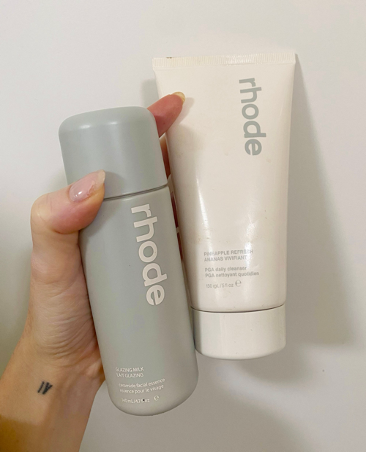
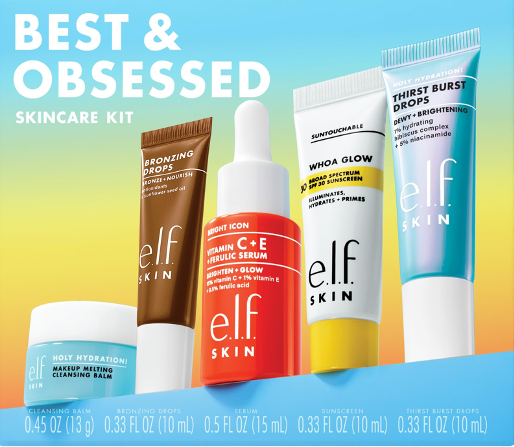
e.l.f. Beauty has pursued a different but equally strategic path. Its approximately $1 billion acquisition of Rhode by Hailey Bieber provides access to a digitally native, Gen Z–aligned brand with strong cultural resonance. The move expands e.l.f.’s footprint beyond value cosmetics into prestige skincare and reflects a recognition that organic brand-building cycles are lengthening. Social-native brands can scale rapidly; acquiring cultural equity can be faster than constructing it incrementally.
Biotech as the New Differentiator
L’Oréal is investing heavily in lab-designed, greener ingredients, targeting a significant shift toward bio-based raw materials by 2030. L’Oréal is leveraging biotechnology to create sustainable alternatives to petrochemical-based ingredients, such as in its partnership with Geno to create sustainable surfactants. Supported by over €1 billion in annual R&D, the strategy centers on high-performance, sustainable actives across hair, skin, and color. Key collaborations include Debut (bio-identical ingredients), Abolis and Evonik (industrial-scale bio-manufacturing), Veminsyn (AI-driven actives), along with investments in Microphyt, Future Origins, and Algentech to accelerate sustainable ingredient innovation.
Personalization as Infrastructure, Not Feature
Beiersdorf, through its O.W.N platform, uses skin scanning and algorithmic analysis to create customized formulations, converting one-time buyers into recurring subscribers. Diagnostic engines, virtual try-on tools, and predictive analytics are increasingly embedded across portfolios to increase lifetime value and reduce churn. Similarly, Oddity acquired biotech startup Revela to accelerate AI-driven molecule discovery, highlighting how technology and cultural relevance are increasingly intertwined in competitive strategy.
In beauty’s next chapter, belief may attract consumers , but only capability will keep them.
REN Clean Skincare’s closure, which has prompted questions such as “is REN skincare going out of business”, should not be read as the end of clean beauty, but as the end of clean as a standalone strategy. The brands that will define the next decade are not those that simply reflect consumer values, but those that operationalize them, through proprietary science, clinical proof, intelligent data systems, and resilient supply architecture. In an industry where sustainability is expected and efficacy is demanded, enduring advantage will belong to companies that transform belief into capability. Clean was the catalyst. Infrastructure is the future.
Conclusion
The shutdown of REN Clean Skincare should not be viewed as the end of clean beauty. Instead, it represents the evolution of an industry where sustainability has become expected rather than exceptional.
For beauty brands, investors, and industry leaders, the message is clear: future growth will come from combining sustainability with science, technology, clinical validation, and proprietary innovation.
Clean beauty may have started the conversation, but the next decade of competitive advantage will be built on capability.