

Supply chains often reveal strategic pressure before the market openly reflects it. We help organisations read these movements with greater clarity so procurement and supply decisions are grounded in stronger market intelligence.
Supply chain decisions are rarely operational alone. They shape reliability, pricing power, delivery confidence, supplier dependence, and the ability to respond when markets become unstable.
We believe supply chain and procurement intelligence should go beyond vendor tracking or sourcing visibility. It should reveal where dependencies are building, where supply conditions are tightening, and how procurement patterns may influence broader business stability.
This creates a stronger basis for strategic judgement. Organisations gain clearer visibility into the structures, pressures, and signals that can affect continuity, leverage, and long term procurement resilience.
We begin by mapping the supplier ecosystem linked to the category, material base, or procurement environment. This helps establish who is participating, where supply is concentrated, and how the ecosystem is structured. The process creates the foundation for deeper supply intelligence.
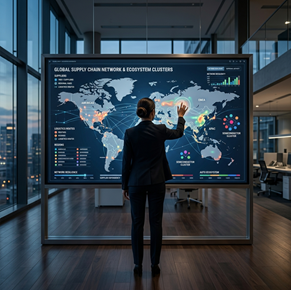

We analyse sourcing behaviour across supplier relationships, procurement routes, and input dependencies. This helps identify how supply is being accessed and where procurement reliance may be building. The analysis brings structure to how sourcing decisions are understood.
We examine where supplier concentration, limited alternatives, or category reliance may create procurement pressure. This helps identify points where flexibility may narrow under changing market conditions. The review clarifies where procurement exposure may sit.


We study the factors that may affect continuity across sourcing, supplier stability, and operational flow. This includes examining conditions that may interrupt or weaken procurement consistency. The assessment helps interpret where continuity risk may emerge.
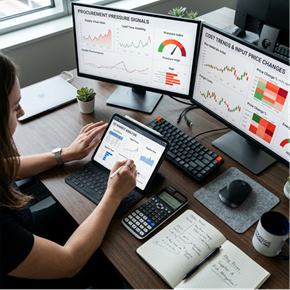
We monitor shifts in input conditions, sourcing pressure, and procurement related cost signals. This helps reveal where supply side changes may influence pricing, availability, or negotiation position. The tracking adds context to the procurement movement.
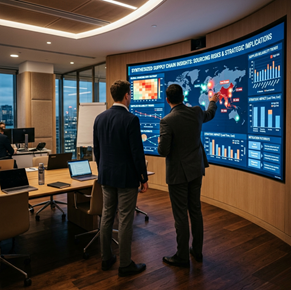
We synthesise sourcing, dependency, and continuity signals into a clearer view of what they may mean strategically. This helps move the analysis beyond procurement visibility into business relevant interpretation. The process connects supply intelligence with broader strategic planning.
A stronger view of how the supplier environment is structured and where concentration may exist.
Greater clarity on how sourcing patterns and dependencies are developing.
Improved visibility into conditions that may affect continuity or procurement stability.
A clearer understanding of supply side signals that may influence pricing or leverage.
Better awareness of procurement exposures before they become harder to manage.
Supply intelligence organised to support more informed sourcing and strategic planning.
When procurement begins relying too heavily on limited suppliers, regions, or sourcing channels.
When cost movement across materials or supply inputs starts affecting pricing, planning, or procurement leverage.
When organisations need to assess new sourcing routes, supplier options, or procurement structures before scaling.
When disruption signals begin appearing across suppliers, sourcing conditions, or procurement flow.