Cigarettes have been a focus of health and regulatory scrutiny for decades, but their basic design – burn tobacco to release nicotine – was relatively fixed. Over the past 20 years, new alternatives have emerged. Electronic cigarettes (e-cigarette or vapes) heat a liquid (often containing nicotine) to produce an inhalable aerosol, while heated tobacco products (HTPs) heat processed tobacco without burning it. The first e-cigarette designs were conceived as simpler burnless ways to deliver nicotine.
However, the innovation did not stop there. Today’s products, from the modern e-cigarette to the latest HTP, increasingly combine electronics and materials engineering to create “smart” nicotine-delivery systems. A modern e-cigarette (vaping device) or HTP may include: puff and airflow sensors (detecting when and how the user inhales), microcontrollers (processing sensor data), precision heaters (such as metal mesh or induction elements), battery and liquid monitors, and Bluetooth or NFC modules for connectivity. They may use advanced materials (ceramic heaters, nanofiber wicks, biodegradable plastics) and incorporate safety and personalization features.
How Regulators and Technology Define the Modern E-Cigarette
Official definitions recognize this shift. The FDA describes e-cigarettes as battery-operated devices that heat an e-liquid to create an inhaled aerosol. Heated tobacco products “use electronic heating elements to heat processed tobacco leaf”. Both are tobacco products under law, but now they often include components once more associated with consumer electronics or smartphones. For example, the FDA now treats programmable software, digital displays, atomizers and batteries as regulated parts of e-cigarette systems. In practical terms, products like PMI’s IQOS VEEV e-cigarette combine a metal-mesh heater, puff sensor, and software temperature control to manage vapor delivery.
Timeline (product evolution): The shift can be sketched as a timeline. Early e-cigarettes (mid-2000s) began the move away from combustion. Pod-based e-cigarette devices (around 2015) and the FDA’s 2016 deeming rule further formalized these products as tobacco devices. Around 2014–2016, heated-tobacco systems like IQOS emerged globally. In recent years, particularly from 2020 onward, Bluetooth-connected e-cigarettes, induction heaters, touchscreens, and app ecosystems have appeared. The figure below illustrates key milestones.
In summary, the e-cigarette and HTP narrative has moved from “burn tobacco” → “heat liquid” → “heat tobacco” → “sense and control delivery” → “connected ecosystem.” We will unpack each stage, showing how sensors, software and materials converge in these next-generation products.
From Traditional Tobacco to the Modern E-Cigarette and Alternative Delivery Systems
Traditional cigarettes rely on combustion i.e. igniting paper-wrapped tobacco to generate smoke. Tobacco industry and regulators alike recognize that burning tobacco produces thousands of chemicals, many harmful. Smoking prevalence and public health campaigns drove demand for alternatives.
The Emergence of the E-Cigarette
The e-cigarette (vapes) emerged in the mid-2000s. As the FDA notes, e-cigs heat a liquid containing nicotine (usually tobacco-derived) plus propylene glycol, glycerin and flavorings, producing an inhalable aerosol. Early e-cigs were simple- a battery, a heating coil/wick (atomizer), and a liquid cartridge. Many early designs (often pen-style) mimicked the look of cigarettes. By 2013, brands like Vuse began pushing more advanced disposable devices.
Concurrently, Heated Tobacco Products (HTPs) (sometimes called heat-not-burn) appeared. As Heated Tobacco Products use an electronic heating element to warm processed tobacco leaf, generating an aerosol with nicotine. Unlike e-cigs, HTPs heat actual tobacco. Examples include PMI’s IQOS, BAT’s glo, and JTI’s Ploom. IQOS (US market name: VEEV) became one of the first HTPs globally. FDA authorized IQOS and certain tobacco sticks as Modified Risk products (lower exposure claim) in 2022, noting they heat without burning.
How Product Architecture Changed
These shifts changed the product architecture:
- E-cigarettes generally consist of a battery, a liquid cartridge or pod, a heater or atomizer, and a mouthpiece. Some devices also include small displays or LED indicators.
- Heated tobacco products generally consist of a battery-powered device, a replaceable tobacco stick or plug, a heating element, and a mouthpiece. For example, IQOS ILUMA uses a rechargeable holder and special TEREA Smartcore Sticks that are heated by induction.
In both cases, nicotine formulation became only one part of the product. The rest became technology components (electronics and materials) that defined the user experience. For instance, devices may offer adjustable temperature, battery indicators, or flavor cartridges, extending beyond traditional “tobacco product” functionality.
In summary, the transition from cigarettes to e-cigs and HTPs was the first major step. It set the stage for the next evolution: adding intelligence, connectivity and advanced materials to those battery/heater systems. The product journey is now about building “smart” nicotine delivery platforms, not just new smokeless consumables.
Intelligent E-Cigarette Hardware: Sensors, Heating and Modular Architecture
The hardware in modern nicotine devices has grown far beyond a simple coil and wick. Key advances include embedded sensors, novel heating elements and modular design that separates reusable electronics from disposable consumables.
Sensors and Monitoring
Modern devices can include tiny sensors for puffing (flow or pressure), temperature, liquid level, battery charge, and even device orientation. For example, PMI’s IQOS VEEV eliminates the traditional wick-and-coil and uses a puff sensor to activate heating. The device also detects low liquid levels to cut off the heater if the e-liquid is nearly depleted. Patent filings show systems combining airflow and temperature sensors: one PMI patent places a temperature sensor in the vapor path, using measured temperature changes to control heater power. Another (CN104571191A) feeds real-time heater temperature back to the controller for precise regulation. These sensors enable a feedback loop: the device can adjust heating in response to how the user inhales, improving consistency.
Advanced Heating Elements
Traditional vaporizers used a coiled wire wrapped around a wick. Newer systems use metal mesh or ceramic to spread heat more evenly. PMI’s Mesh Vaping System (VEEV) replaced the coil with a flat metal mesh, increasing heating surface and reducing “dry puff” artifacts. Ceramic heaters (e.g. PMI’s Ceramic Vaping System) provide even smoother vapor, though mesh remains in use for disposable formats. On the tobacco-heating side, IQOS ILUMA introduced a bladeless induction heater: a metal element inside the special TEREA sticks that heats tobacco from within. This removes ash and cleaning needs and promises more uniform heating. In short, manufacturers are innovating on heater design and materials to improve efficiency and user experience.
Modular and Detachable Components
Most products now separate the reusable electronics module (battery, sensors, controller) from the consumable (pod, cartridge, stick). This pod-based architecture is seen across brands. The reusable unit houses the sophisticated hardware and is retained between uses, while pods or sticks (pre-filled with liquid or tobacco) are replaced. This modularity allows the electronics to be more expensive and feature-rich (since they last longer), and makes the consumables simpler and cheaper. It also allows integration of features like pod ID chips (below).
E-Cigarette Patents on Intelligent Hardware
These hardware developments are reflected in recent patents. Below is a sample of representative patents focusing on intelligent hardware:
Each illustrates the trend of combining sensing components, a processor, and a heater in one design. For instance, CN116570075A discloses a pressure sensor, temperature sensor, micro-heater, and control chip in a single e-cigarette assembly. This hardware intelligence enables features such as temperature regulation and safety cut-offs that earlier devices lacked.
In summary, the hardware of next-gen products means much more than a battery and heating coil. It encompasses a suite of sensors, smarter heaters (mesh, induction), and a modular architecture that together create a responsive, user-adaptive device.
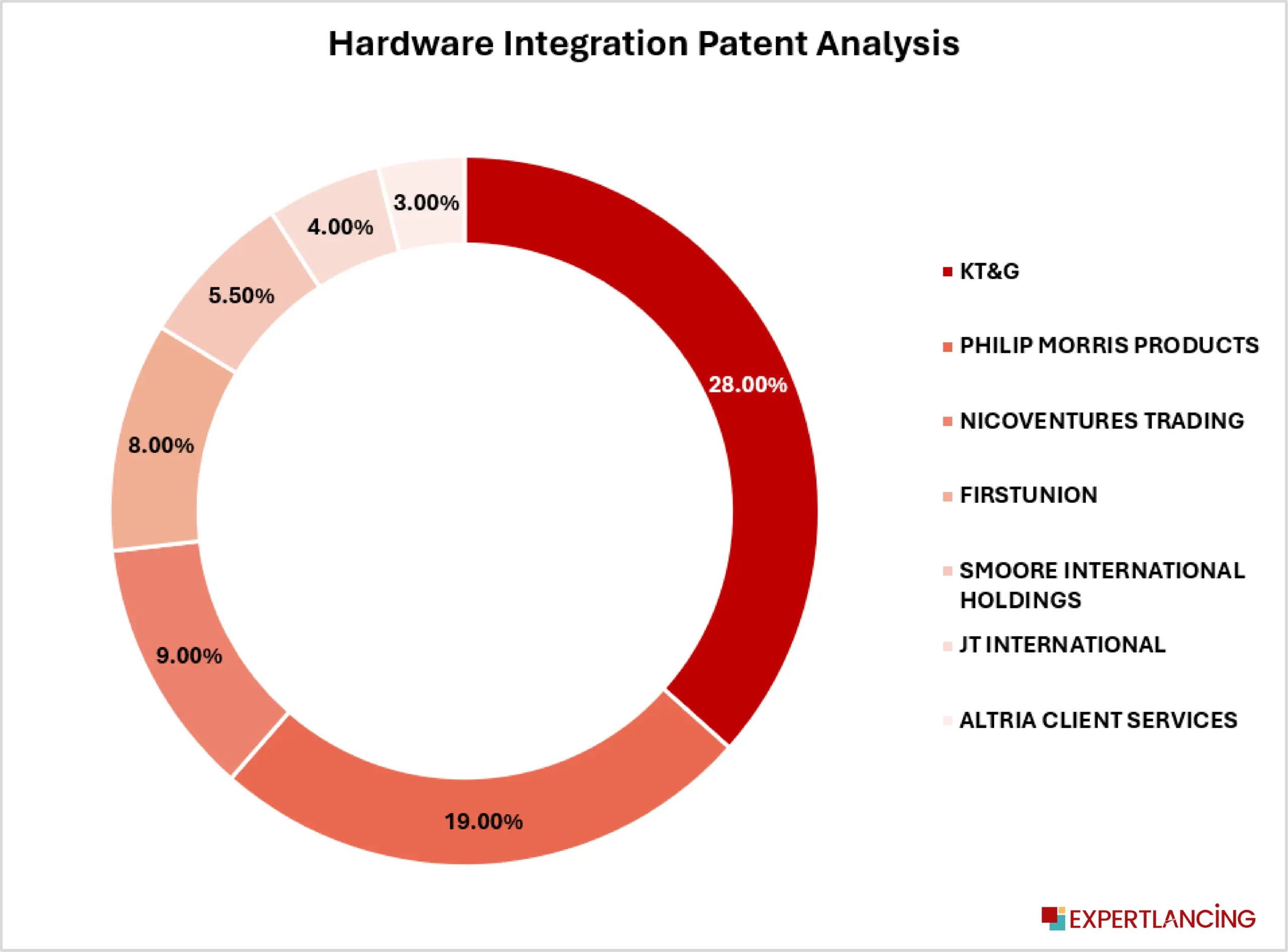
The identified prior art demonstrates various approaches for sensing and controlling temperature in electronic-cigarette and vapor-generation devices. These references generally use temperature, pressure, airflow, or infrared sensing to monitor the heating process and adjust heater operation accordingly. The following patents illustrate representative implementations, ranging from direct vapor-temperature detection to integrated sensor-based and infrared temperature-control systems.
| Patent | Assignee | Technology Focus |
| EP4048103B1 | JT INTERNATIONAL SA | A vapor temperature sensor detects the temperature of vapor generated by the heater, and the detected temperature is used to control the heater. |
| CN116570075A | SHENZHEN SUIJING SEMICONDUCTOR CO., LTD. | A pressure sensor, temperature sensor, processing circuit, and micro-heater are integrated in an electronic-cigarette device, with the processing circuit controlling the micro-heater based on sensor signals. |
| CN117179387A | SHENZHEN BOWEI INTELLIGENT CONTROL CO., LTD. | An infrared imaging module detects the temperature of a heating element, and a control module adjusts the heating power according to the detected temperature. |
| EP3852561B1 | FONTEM VENTURES BV | An airflow sensor and temperature sensor are used with electronic compensation to correct temperature-related errors in airflow measurement for controlling an electronic-cigarette device. |
Software & Connectivity: Data, Apps and Digital Control
With processors onboard, devices naturally moved into the digital realm. Software control and wireless connectivity have become a third pillar of the product, alongside hardware and materials.
Embedded Software and Control
All modern devices include microcontroller firmware that reads sensors and drives heaters. But now these algorithms are increasingly sophisticated, enabling things like precise temperature regulation, power management, and user safety features. Some devices offer on-device menus (touchscreens or buttons) to adjust power or puff mode. PMI’s IQOS ILUMA, for instance, added a small touchscreen interface for features like Pause Mode and user settings.
Bluetooth & Mobile Apps
Many leading devices now incorporate Bluetooth or other wireless radios. The JUUL2 platform, for example, explicitly includes Bluetooth connectivity and a smartphone app. The device can sync with an app to show battery level, session data, or to lock/unlock the device. BAT’s Vuse Ultra connects to the MyVuse app, enabling features like flavor tracking and device locking. The basic architecture is – Device ↔ Bluetooth ↔ Smartphone App ↔ Cloud Service. Patents dating back to 2014 (e.g. US20140202477A1) envisioned just this scenario – a Bluetooth v4.0-based intelligent electronic cigarette with a microcontroller that communicates bidirectionally with a phone app. Today’s products realize that vision with secure Pod ID chips and app integration.
Usage Data and Analytics
Software turns the device into a data logger. Companies can collect anonymized usage patterns, and users can view their own habits. Patents (e.g. WO2018025217A1) describe tracking puff times, durations, and using GPS to build usage maps. These data can be used for personalized feedback, or for studies on smoking/vaping behavior. For example, JUUL2’s marketing emphasizes device location, real-time battery and pod-level information via the app. Data can also aid maintenance: e.g. alerting the user to low liquid or needed cleaning.
Authentication & Access Control
A major new software feature is digital identity. JUUL2 uses a Pod ID chip so the device recognizes authentic pods and prevents counterfeits. The JUUL app also supports an age-gate and device lock, ensuring only a verified user can activate it. NJOY’s ACE 2.0 explicitly uses Bluetooth-based age verification to prevent underage use via device unlock. Similarly, US patents (US10721971B2) describe embedding QR codes or RFID in vaporizer parts for traceability and lockout. In short, the software stack adds layers of security and personalization unimaginable in old-style cigarettes.
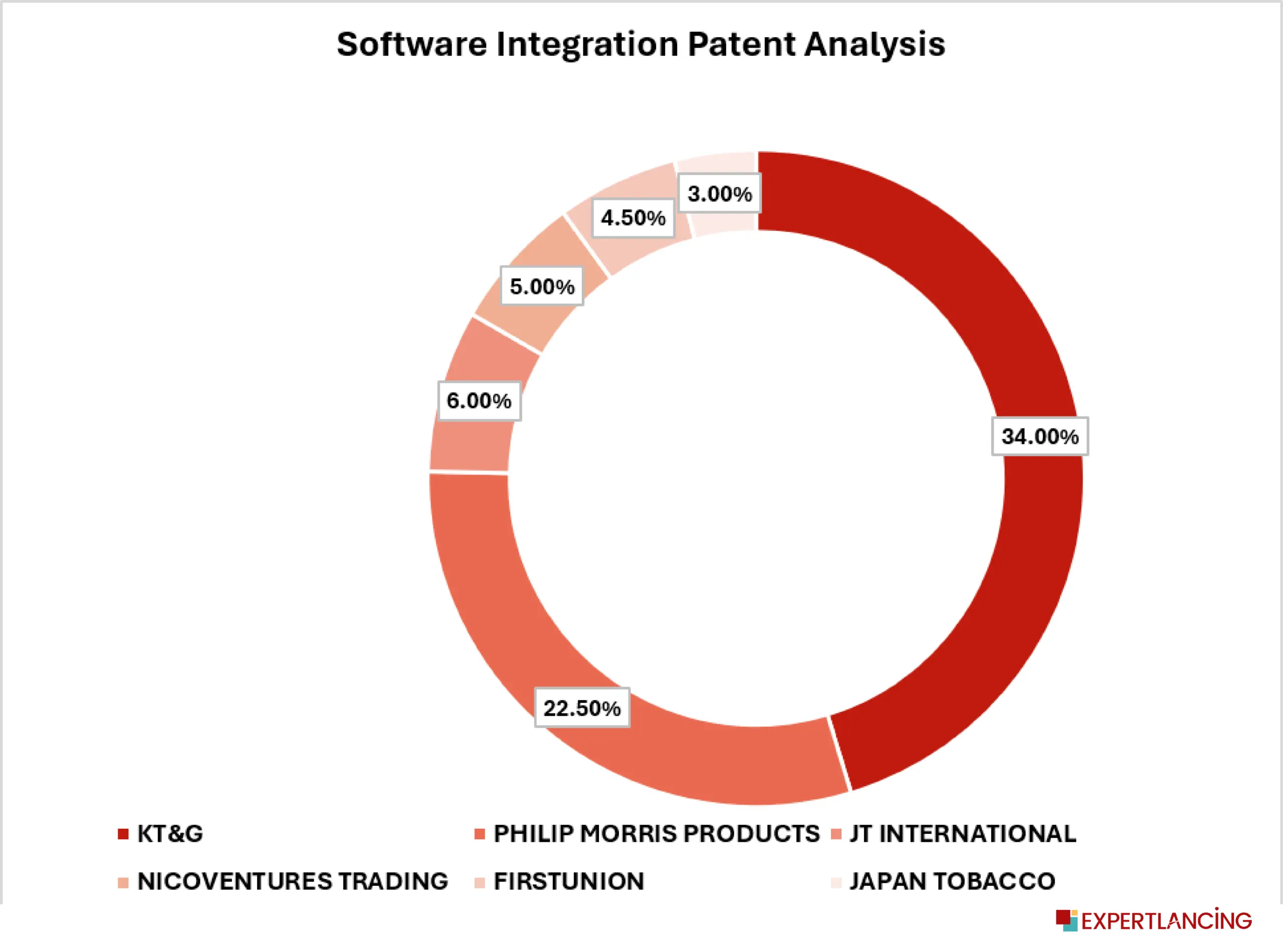
Connected E-Cigarette Patents
The identified references cover connected and digitally enabled electronic-cigarette systems, focusing on communication, usage monitoring, device tracking, and authentication. These references demonstrate how electronic-cigarette devices can exchange data with smartphones or cloud platforms, monitor user activity, and use device-specific identifiers for tracking and security. The following patents provide representative examples of these functionalities.
| Patent | Assignee | Technology Focus |
| US20140202477A1 | JUNGUO QI | Bluetooth 4.0 communication between an electronic cigarette, mobile application, and cloud service, enabling bidirectional data exchange and monitoring/control of smoking-related data. |
| US2019183185A1 | DR REDDYS LABORATORIES LTD | Electronic-cigarette usage monitoring and control technology for collecting user usage information and enabling monitoring and management of electronic-cigarette use. |
| EP4136994A1 | JT INTERNATIONAL SA | Bluetooth communication between an electronic cigarette and smartphone, with the smartphone storing the device’s geographic position and displaying the last-known position to assist in locating the device. |
| US10721971B2 | AIRGRAFT INC | Vaporizer and cartridge identification and authentication using identifiers such as serial numbers, barcodes, QR codes, NFC/RFID tags, or stored electronic identifiers for security and traceability. |
Relevant patents in this space include:
For example, US20140202477A1 shows an MCU and Bluetooth module that communicate bidirectionally with a mobile app. These patents highlight how the industry is building an integrated ecosystem connecting the device, mobile application, and cloud service.
In summary, software and connectivity have turned tobacco devices into smart gadgets. The product now includes not just the inhaler, but also companion apps, data analytics and digital identity systems. This layered architecture allows personalization (flavors, heating curves, usage limits), anti-counterfeit measures (Pod ID), and remote control (device lock), none of which were possible in analog cigarettes.
Materials & Controlled Delivery in the E-Cigarette
The choice of materials in a device directly affects its performance and sustainability. Recent innovations show materials becoming active parts of the technology, not just inert packaging.
Novel Heating and Aerosol Materials
As noted, PMI’s VEEV uses a stainless-steel mesh heater instead of a coil, while the cartridges hold the liquid. This change in heater material improves heat transfer and vapor consistency. Similarly, the TEREA Smartcore Sticks used in IQOS ILUMA include a metal heating element integrated into the tobacco stick. These engineered materials (mesh, induction coils, ceramics) are chosen for their thermal properties. Another example: BAT’s Vuse Ultra pods use an improved ceramic heating element (FlavourMax™ technology) for better flavor delivery.
Advanced Substrates and Reservoirs
The reservoir and wicking materials have also evolved. Some patents explore nanocellulose or biodegradable fibers as wicking material to improve safety and sustainability. For instance, EP3934459A1 discusses using a nanocellulose substrate in an aerosol-generating article, while CN115819933B covers degradable e-cigarette shell materials. These efforts reflect industry focus on greener materials. In practice, companies are adding recycled plastics and bio-based polymers: PMI reports using 100% recycled plastic in the textile layers of some devices and aluminum from renewable sources.
Combined Material-Device Systems
Materials and hardware are co-designed for controlled delivery. The device’s reservoir, wick, heater and airflow path form a single aerosol-engineering system. PMI describes VEEV’s sensor-software-heater loop: when the puff sensor activates, software-controlled heating and low-liquid detection ensure the aerosol remains consistent even as liquid evaporates. This materials plus control approach is the future: e.g. RELX’s devices use an “Active-steam Pro” atomizer and “Air Boost” design to balance vapor volume and airflow for smooth output.
Patents on E-Cigarette Materials
Relevant patents highlight this interplay of material and delivery:
| Patent | Assignee | Technology Focus |
| US11324249B2 | R.J. REYNOLDS TOBACCO COMPANY | An aerosol delivery device uses a nanocellulose-based substrate as the aerosol-forming substrate. |
| CN115819933B | HUASHUO ENVIRONMENTAL PROTECTION TECHNOLOGY GUANGDONG CO., LTD. | A fully degradable electronic-cigarette cartridge shell material formed from PBS and PLA with additives to provide the required mechanical, heat-resistance and transparency properties. |
| US12256780B2 | PHILIP MORRIS PRODUCTS SA | A cartridge uses few components and reduced raw materials with components designed to be recyclable or biodegradable and the cartridge configured for easier disassembly and separate recycling. |
| CN113729284B | SHENZHEN RUIKE TECHNOLOGY CO., LTD. | Provides an electronic-cigarette cartridge with a replaceable and reusable oil reservoir and base, allowing the cartridge components to be reused rather than discarded after a single use. |
These patents show that new materials are being engineered into the delivery system itself. In summary, materials innovation is now as important as electronics. Advanced heating elements, engineered wicks, and new plastics/biopolymers determine how effectively nicotine is vaporized and what the environmental footprint is. The best future products will integrate materials science into the device design to deliver nicotine precisely and sustainably.
Toward Controlled and Adaptive E-Cigarette Delivery
The convergence of hardware, software and materials becomes most significant when these elements operate together as a feedback system. A conventional electronic device can simply activate the heater when a puff is detected. A more advanced architecture can use sensor information to determine operating conditions and modify heating accordingly.
The basic control sequence involves sensing, processing, actuation and feedback. Airflow or puff information can trigger the system; temperature or other measurements can be processed by a controller; heater power can then be adjusted according to predetermined conditions.
- Sensing: The device detects puff flow/pressure, measures heater temperature, monitors liquid level, and checks battery state.
- Software Processing: Onboard firmware (or the connected app) interprets these sensor signals. It applies control algorithms to decide how to adjust power.
- Actuation: The device then adjusts heater voltage or timing to modulate vapor production.
- Feedback & Adaptation: The device continuously adjusts as the user draws, ensuring consistent aerosol density and avoiding dry puffs. It might pause heating if the liquid is too low or shut down to prevent overheating.
This approach enables the device to respond to changing operating conditions rather than relying exclusively on fixed settings. Patent activity reflects this transition. EP4048103B1 describes heater control based on generated-vapor temperature, while WO2024222119A1 addresses the use of temperature-related measurements around the heater for regulating heating behavior.
The importance of this development lies in the integration itself. Sensors provide the data, software interprets the data, hardware executes the response, and materials determine how the physical system reacts.
Global E-Cigarette Market and Key Companies
A useful way to examine the evolution of smart electronic cigarettes is to first identify the companies whose products represent different stages of this development. The global e-cigarette market includes multinational tobacco companies, specialist vaping companies, and manufacturers focused on pod and disposable devices. Rather than considering market size alone, the companies selected for this analysis represent significant market presence and different stages of technological development, including pod-based systems, adjustable electronic control, sensor-driven operation, wireless connectivity, and smart-device features.
Key E-Cigarette Brands and Their Smart Features
| Company | Brand / Product | Key Features |
British American Tobacco (BAT) |
Vuse Ultra | Bluetooth connectivity, MyVuse app integration, smart pod recognition through built-in chip, ClearView digital display, battery and e-liquid level monitoring, adjustable low/medium/high intensity modes, Flavor Autotune for heat, power and intensity adjustment, device lock/unlock, usage and puff tracking, Find My Vape, wireless and USB-C fast charging, removable battery. |
Altria / NJOY |
NJOY ACE 2.0 | Bluetooth-enabled access restriction, user authentication before device unlocking, electronic access control designed to prevent unauthorized/underage use. |
Philip Morris International (PMI) |
VEEV ONE / VEEV NOW | Ceramic heating technology, electronic heating of nicotine-containing e-liquid, compact e-vapor device, VEEV NOW integrated e-liquid storage, disposable architecture with no charging, cleaning or refilling, recycling/return approach for used devices. |
Philip Morris International (PMI) |
IQOS ILUMA / ILUMA i | Blade-free induction heating, SMARTCORE INDUCTION SYSTEM, heating of tobacco from within dedicated TEREA SMARTCORE STICKS, no tobacco residue, no cleaning required, electronic heating control, consecutive-use capability. |
RLX Technology |
RELX Infinity 2 Plus / Phantom Pro | Rechargeable 440 mAh battery, USB-C charging, adjustable 3-level power control, Eco/Smooth/Boost modes, 6.5 W/8 W/10 W output, 4-stage battery indicator, fast charging to 80% in 15 minutes, compatibility with multiple RELX pod platforms. |
Geek Bar |
PULSE / PULSE X / PULSE 2 | Digital/full-screen interface, dual mesh coil, dual-core heating, high-capacity disposable architecture, multiple power/intensity modes, electronic controls, PULSE X VPU system and quick charging, PULSE X 3D curved screen, PULSE 2 raised/dome full-screen interface and visual lighting. |
ELFBAR |
EW16000 SMART / ELFA / ELFX | EW16000 SMART: animated screen, selectable animations, magnetic pod–charging-device connection, mesh coil, battery-status checking, upgraded air-sensor structure, button controls and Type-C charging. ELFX 2: rechargeable 1700 mAh battery, three power modes, dual-mesh technology, LED battery indicator, up to 30 W output, USB-C charging and integrated safety protections. |
Imperial Brands |
blu 2.0 / blu bar | blu 2.0: rechargeable pod system, adjustable flavor intensity, battery-saver mode, button-controlled settings, increased puff efficiency and fast charging to 90% in 35 minutes. blu bar: rechargeable device, prefilled interchangeable pods and fine-mesh coil for consistent flavor delivery. |
JUUL Labs |
JUUL 2 | Bluetooth-enabled device, larger long-lasting battery, smart light system indicating battery/e-liquid level, PodID authentication, age-verification capability, tamper-resistant pods, improved aerosol delivery, advanced heating element, improved temperature-control precision. |
The products in this table illustrate the evolution of e-cigarette technology from basic pod-based systems toward digitally controlled and connected devices. JUUL2, RELX, blu and NJOY demonstrate the development of compact rechargeable systems with electronic controls, while Vuse Ultra further integrates Bluetooth, smart pod recognition, digital monitoring and mobile-app connectivity. Geek Bar and ELFBAR show how digital interfaces, sensing and multiple power modes are being incorporated into high-capacity disposable and pod platforms. IQOS ILUMA represents a parallel development using induction-based electronic heating. Overall, these products reflect the shift toward smarter, more electronically integrated vaping platforms.
Geographically, the market is also diverse. Multinational companies such as BAT and Imperial Brands have established broad international vaping businesses, while companies such as RLX Technology, Geek Bar and ELFBAR demonstrate the growing importance of Chinese-origin vaping companies and brands in international markets. This combination of companies and products provides a useful basis for examining how e-cigarette technology has evolved from basic electronic heating systems toward connected and sensor-driven platforms.
Future Trends in E-Cigarette Technology
The next phase of innovation is likely to focus on integration and system-level optimization.
- AI and Adaptive Control: As more sensing information become available, control algorithms may become more sophisticated in interpreting operating conditions and adjusting device behavior. The technological opportunity lies in combining multiple sensor inputs with real-time control rather than treating each measurement independently.
- Predictive and Personalized Systems: Connected software can increasingly link device information, consumable identity and user interaction. This creates a technical foundation for more responsive digital interfaces and device-management functions.
- Advanced Materials: Materials development is likely to focus simultaneously on thermal properties, durability, chemical compatibility, weight and environmental performance. This will require closer integration between materials science and device engineering.
- Greater Hardware-Software Integration: The separation between hardware and software will continue to narrow. Sensors, algorithms and actuators will increasingly be designed as one control system, while connected applications may extend product functionality beyond the physical device.
- Connected Product Ecosystems: The long-term architecture is moving toward a combination of device, consumable, sensors, software and connected services. The product becomes not just a physical article, but a platform with multiple technology layers.
Overall, the trajectory is toward greater intelligence, personalization and integration, tempered by sustainability and regulation. Companies that can tie together all these strands-sensors, data, advanced materials-will lead the next wave of products.
Conclusion: Why System-Level Intelligence Defines the Next E-Cigarette
The evolution of tobacco products is no longer simply a transition from cigarettes to electronic cigarettes. It is a transition from combustion-based products to electronically controlled, increasingly intelligent systems.
The first transformation replaced combustion with electronic aerosol generation or controlled tobacco heating. The next introduced sensors and sophisticated heating systems. Software then added control, connectivity, identification and digital functionality. Materials science has simultaneously evolved to support new heating and delivery architectures. The result is an increasingly integrated product in which hardware senses and acts, software interprets and controls, and materials determine physical performance.
For the IP industry, this convergence creates opportunities across sensor architectures, heater control, embedded algorithms, wireless connectivity, authentication, advanced materials, cartridge design and controlled aerosol-generation technologies.
The defining shift is therefore truly beyond nicotine: the competitive technology is increasingly found in how intelligently the entire e-cigarette system operates. Navigating this shift requires a clear understanding of technology trends, patent activity and the competitive landscape.
ExpertLancing’s Consumer and Industrial Practice supports manufacturers, investors and R&D and IP teams with IP research, technology advisory and market intelligence. Our capabilities include patent landscape analysis, technology assessments and competitive intelligence, helping clients map e-cigarette innovation across sensors, heater control, connectivity, authentication and advanced materials, and benchmark competitor portfolios through patent activity.
With 60+ professionals in India and a presence across the USA and Japan, ExpertLancing brings together IP researchers, technical experts and domain specialists to support informed strategic decisions.
Planning your next move in smart nicotine-delivery technology? Connect with our experts to discuss your requirements.
About The Author