

Litigation-Grade Invalidity Searches help legal teams identify prior art capable of challenging the validity of asserted patent claims. By examining global patents, scientific publications, and technical disclosures, we locate references aligned with specific claim elements and dispute context, enabling stronger invalidity analysis and more informed litigation or pre-litigation strategy.
In patent disputes, the strength of an invalidity position depends on the quality and credibility of the prior art supporting it. Not every reference carries the technical depth or claim relevance required to withstand legal scrutiny.
We believe invalidity searches should focus on identifying prior art that can meaningfully challenge the technical basis of the asserted patent. By aligning search strategy with claim elements and exploring patent and technical literature, we uncover references that may question novelty, obviousness, or technical validity.
This approach helps legal teams build stronger invalidity positions, evaluate dispute risk more clearly, and support litigation or pre-litigation strategy with evidence that stands up under scrutiny.
We break asserted patent claims into precise technical elements to clearly define the scope of the search. Each claim limitation is analyzed to determine what technical disclosures must be identified in prior art. This structured framing guides targeted search strategies and improves the accuracy of invalidity investigations.
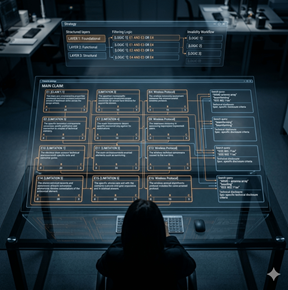

Our search process covers a wide range of technical sources to uncover relevant prior disclosures. We review patents, non-patent literature, product manuals, standards documentation, archived materials, and scientific publications. Exploring diverse sources increases the likelihood of identifying strong references that may challenge patent claims.
Using litigation grade prior art search consulting firm methodologies, we extend research across historical and technical sources. Our analysts investigate patent databases, technical archives, and older publications that may contain overlooked disclosures. This deeper exploration strengthens the foundation for potential invalidity arguments.

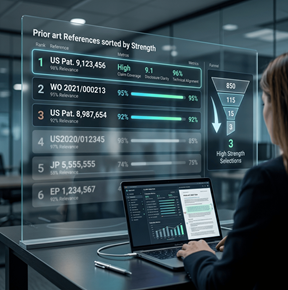
Each identified reference is carefully evaluated for its technical alignment with the asserted claims. Our analysts assess claim coverage, disclosure clarity, and the potential strength of the reference in an invalidity context. This screening process ensures that only the most relevant evidence is prioritized for further analysis.
The strongest prior art references are mapped directly against key claim limitations. This structured mapping highlights how the technical disclosures correspond to the elements of the asserted claims. It provides a clearer understanding of how the identified art may challenge patent validity.

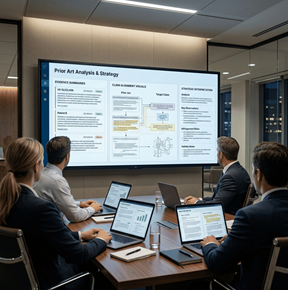
Our analysts organize prior art findings into structured insights that legal teams can easily review and interpret. The results are presented in a way that supports litigation strategy, expert analysis, and case preparation. This clarity helps align technical evidence with broader legal decision-making.
You know which references carry genuine claim-level weight before legal teams commit to an invalidity argument.
Broader source coverage means critical prior art is less likely to surface for the first time during proceedings.
The strength of the invalidity position is understood at the evidence stage, not after litigation has already begun.
Legal teams enter disputes with prior art that is already mapped to claim limitations and structured for immediate use.
Technical evidence is translated into clear insights that counsel can act on without additional interpretation.
References are screened for relevance and strength before they are relied upon in high-stakes proceedings.
Legal teams need litigation-ready prior art quickly.
Formal filings require evidence meeting strict evidentiary standards.
Prior art already identified needs validation before being relied upon.
Before authorising significant legal spend.