
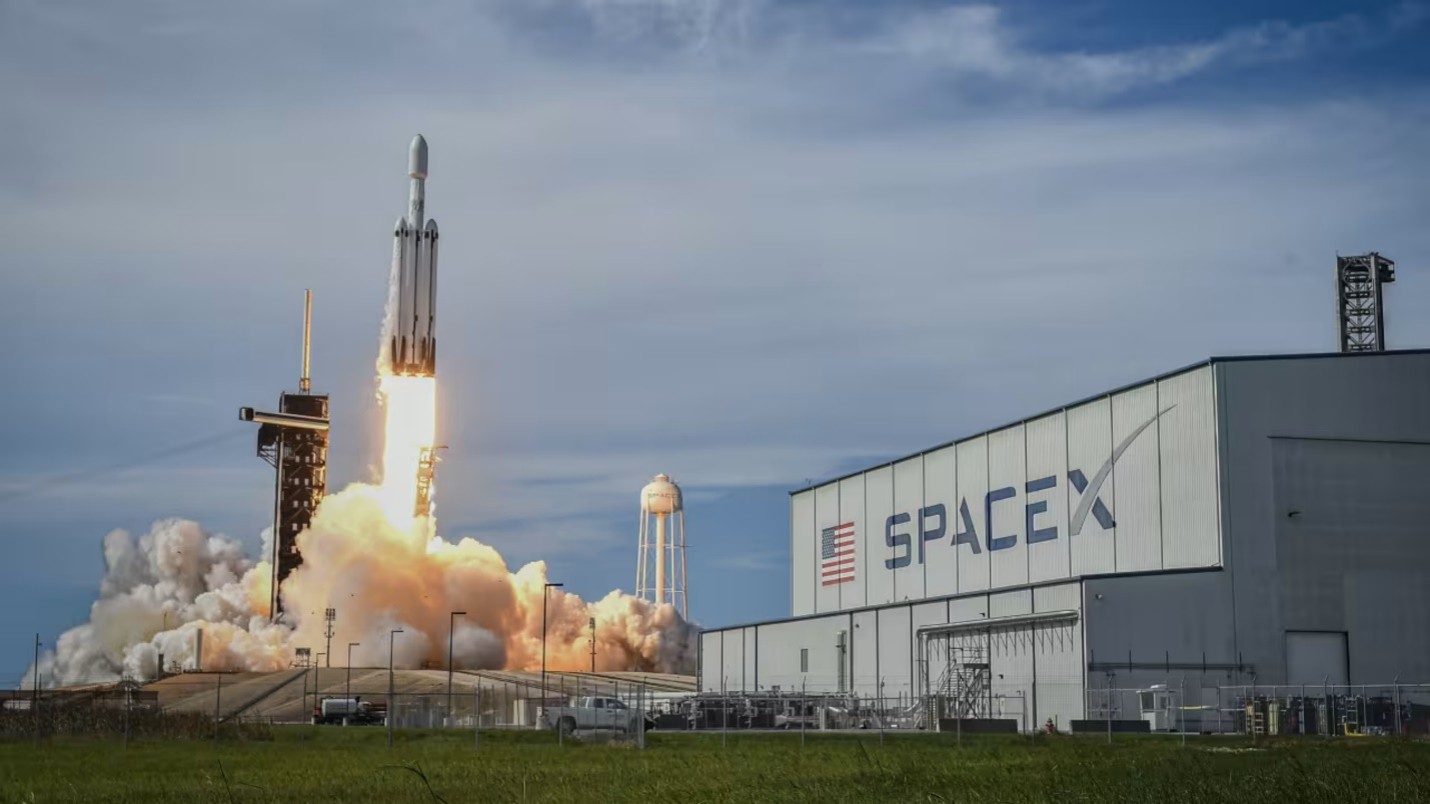
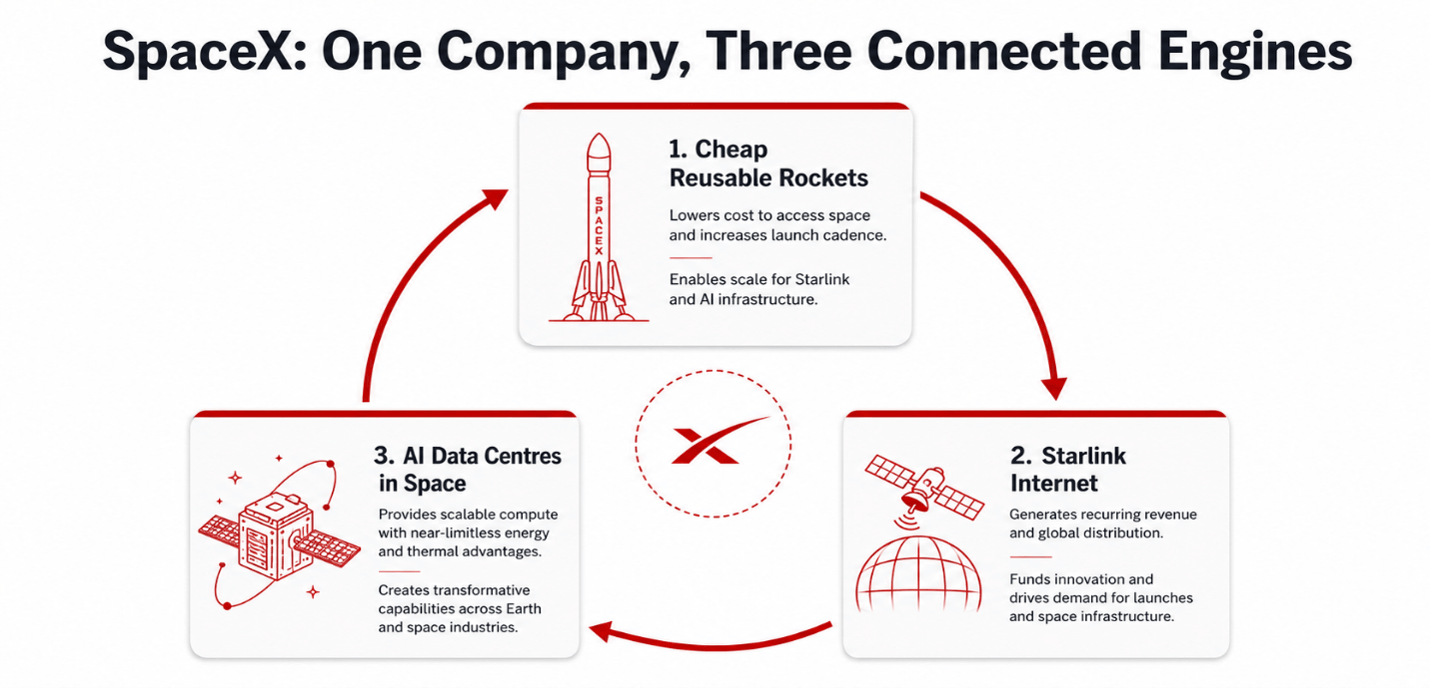
SpaceX is no longer just a rocket company. Today it runs three big businesses together: cheap reusable rockets, the Starlink satellite internet service, and a new bet on AI data centers in space. Cheap launches feed Starlink, Starlink earns the money, and that money pays for the bigger Starship rocket and AI plans. The big question is whether Starship becomes fully reusable on time and whether Starlink can hold its lead against Amazon Leo. This article explains all three in simple words, with the latest market numbers.
What Makes SpaceX Different from Other Space Companies?
If you look past all the share-price noise, the real SpaceX story is about technology and markets. This company is doing three big things at the same time, and that is what makes it special. Most companies do only one. SpaceX is trying to control the full chain, from launching rockets, to giving internet from space, to running computers in orbit.
Let us look at each part one by one.
1. The Launch Business: How Cheap Rockets Changed the Game
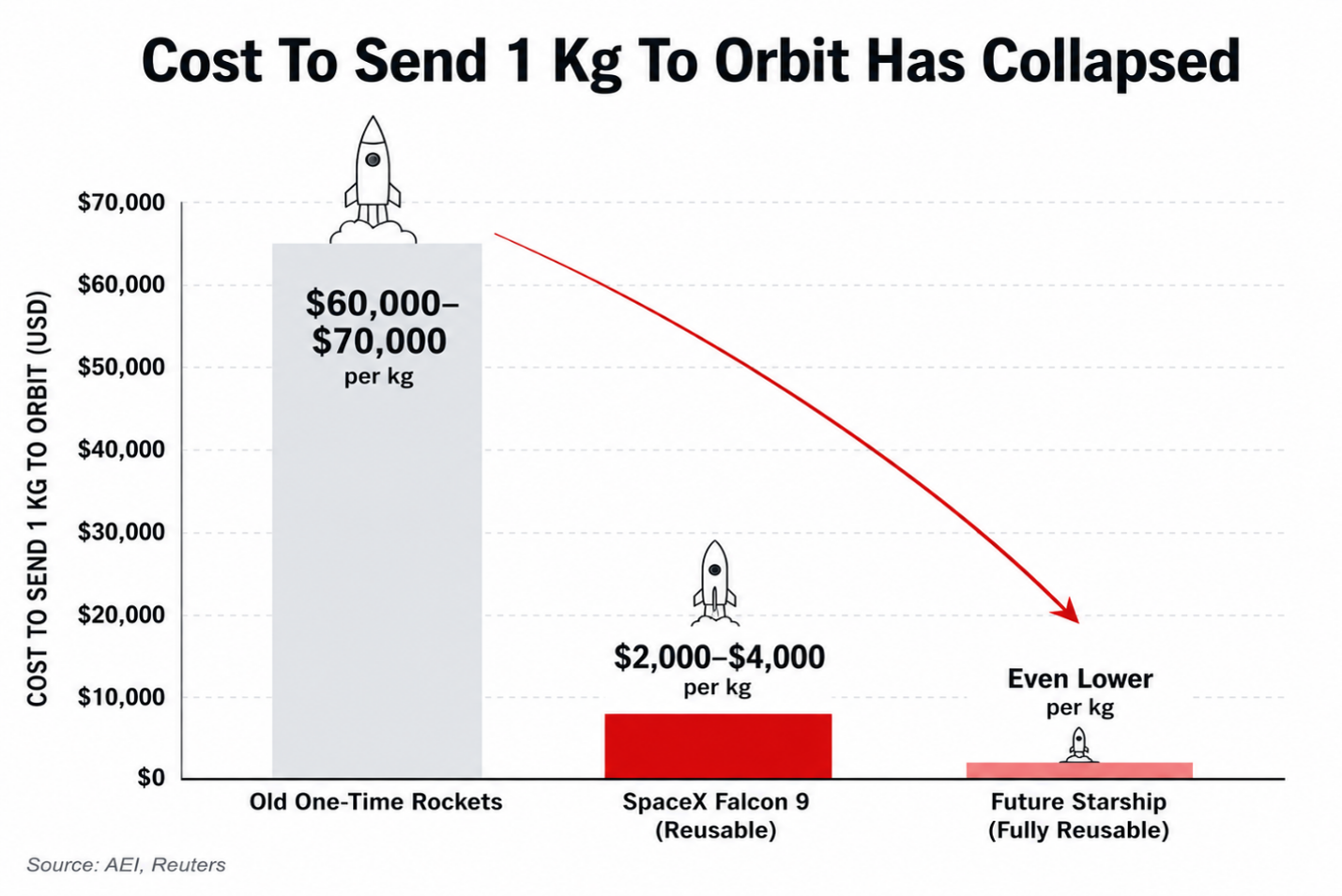
The first thing SpaceX did was make going to space cheap. Earlier, every rocket was used only once and then thrown away. It was like buying a brand-new aeroplane for every single flight. SpaceX changed this by building rockets that come back, land safely, and fly again.
Because of this, the cost of sending things to space dropped a lot. The Falcon 9 rocket now sends one kilogram to orbit for around 2,000 to 4,000 dollars, far less than what old rockets used to charge [AEI]. And they launch very often, more than two times every week, much more than any other company in the world [Reuters]. This is why NASA and the US defense department keep coming back to them.
Now they have a bigger rocket called Starship. It is fully reusable and can carry more than 100 tones to orbit. If it works fully, the cost of going to space will fall even more [AEI]. In May 2026, Starship did a test flight, dropped some dummy satellites, and landed in the Indian Ocean in a controlled way, even though there were some small engine problems [Reuters]. This is a big step forward.
2. Starlink: The Internet That Comes from the Sky
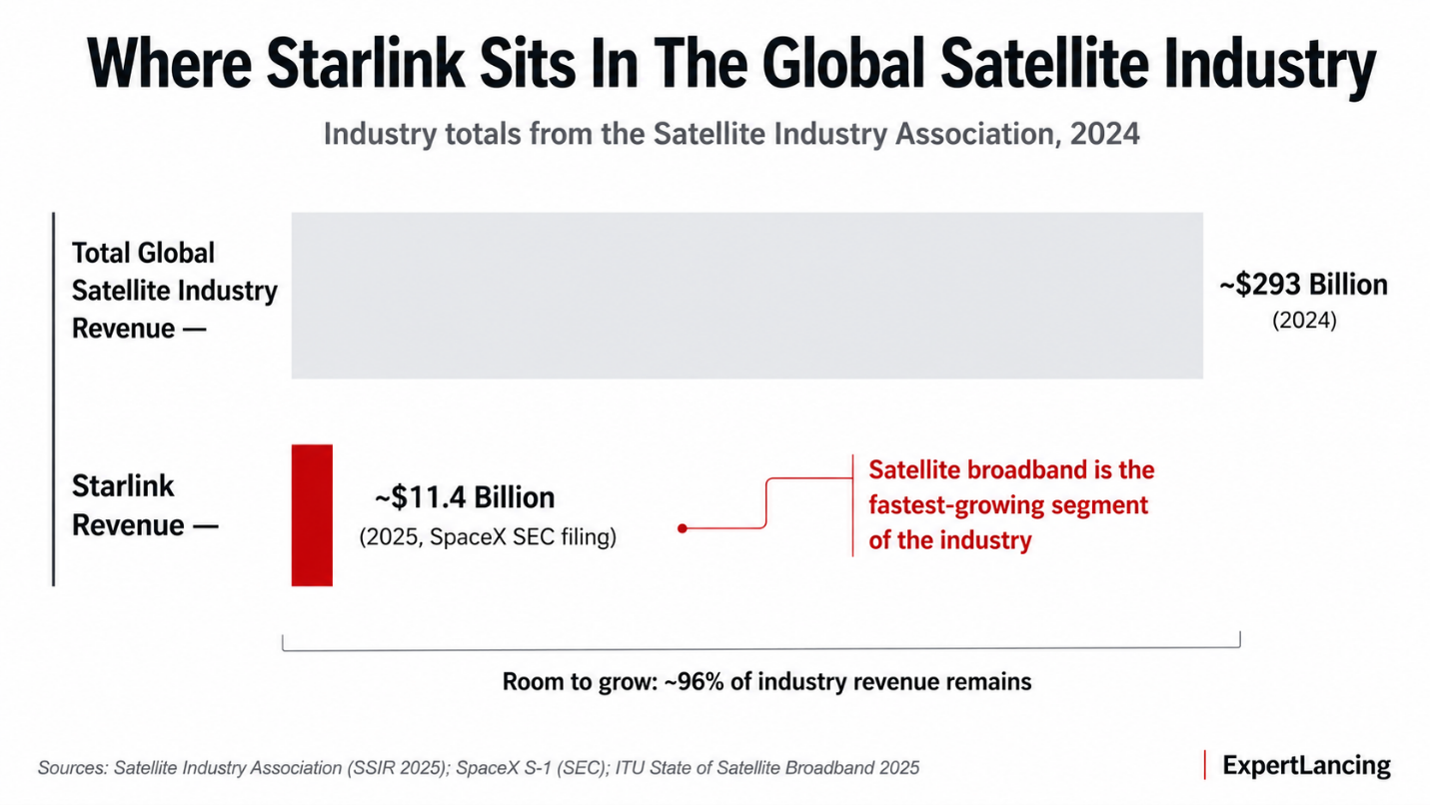
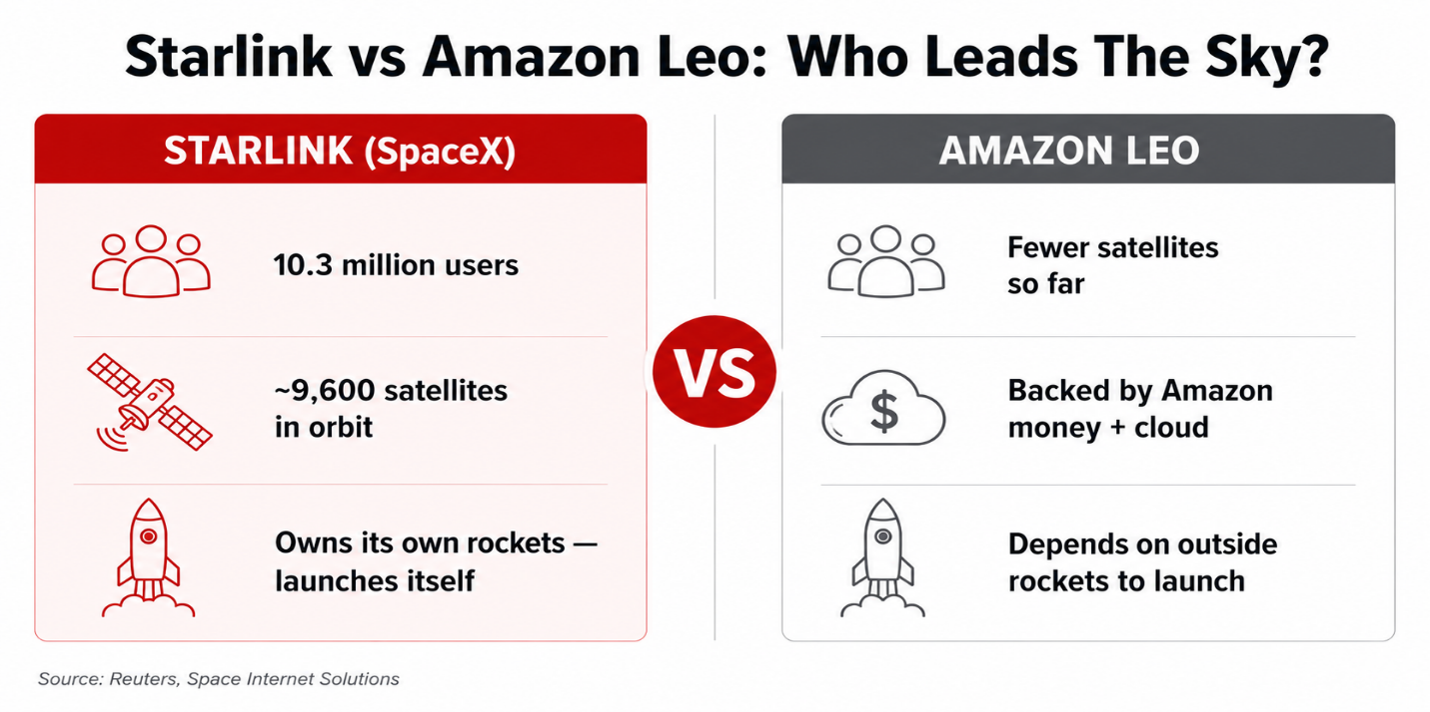
The second business is Starlink. Because SpaceX can launch rockets cheaply, it can put up its own satellites and give internet from space. No other company can match this on cost. Today Starlink has around 10.3 million users and about 9,600 satellites in the sky [Reuters]. It earned around 11.39 billion dollars in 2025 [Yahoo Finance].
How Big Is the Satellite Internet Market?
The market for satellite internet is growing fast. It was around 14.6 billion dollars in 2025 and may reach 33 billion dollars by 2030 [MarketsandMarkets]. The next big opportunity is sending signals directly to normal mobile phones, which can open a much larger market.
Starlink vs Amazon Leo: Who Will Win?
There is real competition now. Amazon has its own service called Amazon Leo, earlier known as Project Kuiper. It is launching many satellites and the fight is getting serious in 2026 [Space Internet Solutions]. Amazon has plenty of money and a huge customer base. But Amazon has one big problem. It does not have its own rockets, so it must depend on others to launch its satellites. In fact, Amazon asked for more time, blaming launch suppliers [FCC filing].
This is the main advantage for SpaceX. They launch their own satellites, while others have to wait for someone else. That single point is the biggest reason Starlink is ahead.
3. AI in Space: The Big Future Bet
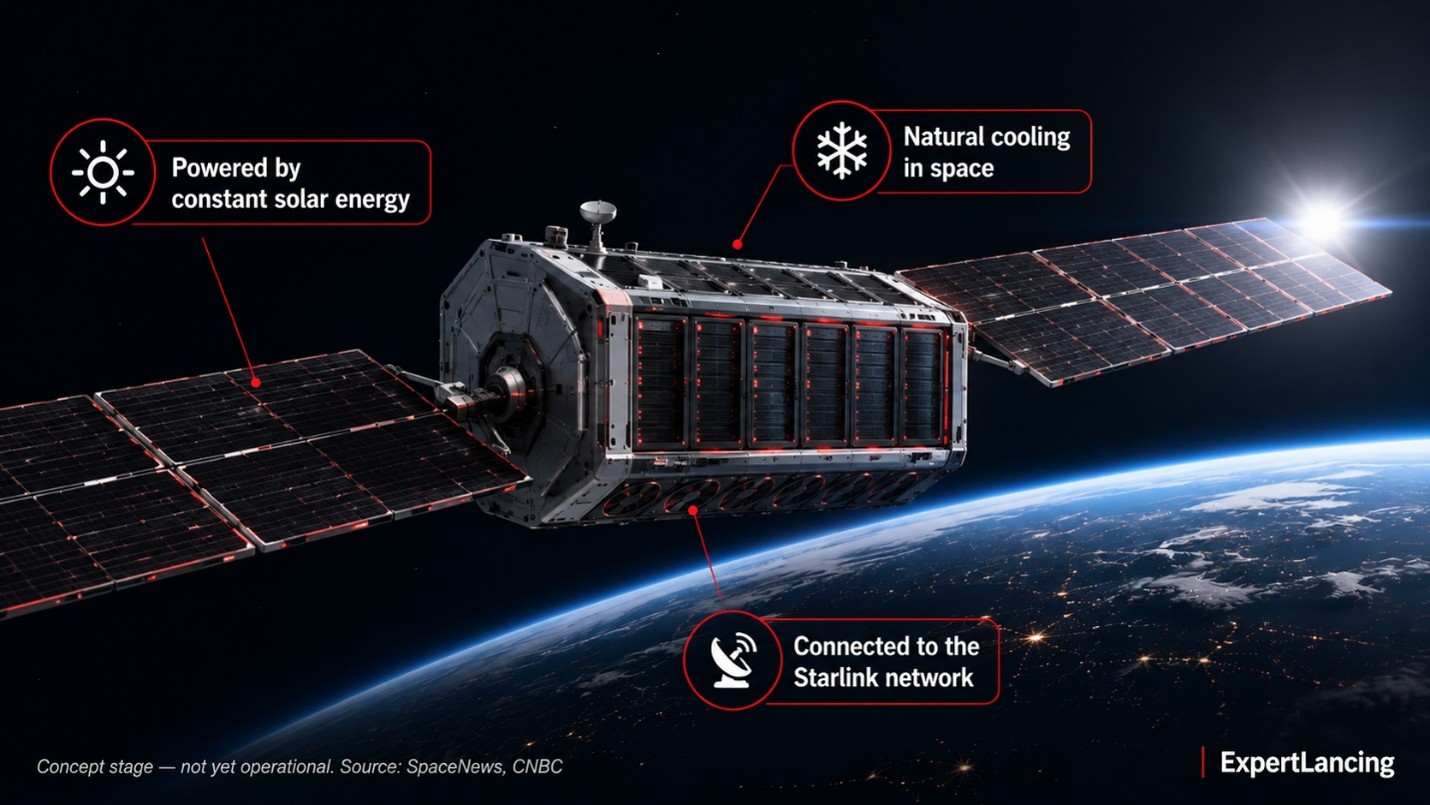
The third business is the newest and the riskiest one. In February 2026, SpaceX took over xAI, the artificial intelligence company. The plan is to build data centers in space that run on solar power [SpaceNews]. The thinking is simple. On earth, AI computers need a lot of power and cooling. In space, there is plenty of sunlight and natural cooling.
But we must be honest here. This is a dream for the future, not something ready today. Right now, xAI mostly needs SpaceX for money [CNBC]. And in the AI market, xAI is behind. Only around 5 percent of business customers use it, while Anthropic and OpenAI have more than 30 percent [Reuters]. So this part is more of a future bet than a real business today.
How All Three Pieces Fit Together
The important part is how these three things help each other. Cheap rockets help Starlink. Starlink earns money that pays for Starship and AI. Starship will help launch the AI data centers. And more AI work means more rockets are needed. It is like a wheel that keeps turning and helps every part grow.
But there is one worry. A single company is becoming very strong in launching rockets, in space internet, and now in space AI. This is great for SpaceX but risky for everyone else. Governments and big customers should not depend fully on one company.
What Should Companies and Governments Do?
- For other rocket companies, fighting SpaceX head-on is not wise. They should find their own special area, like small launches or special orbits, and serve customers who do not want to depend on only one company.
- For internet and telecom companies, it is better to work along with Starlink and Amazon Leo rather than build the same thing again. They should use these networks and build their own services on top.
- For governments and big buyers, the lesson is simple. Do not keep all eggs in one basket. Keep a second option ready in both launch and satellite internet.
Conclusion
SpaceX is not just another space company anymore. It has built something rare. Cheap reusable rockets gave it a head start, Starlink turned that head start into real money, and now the company is using that money to chase even bigger dreams in space-based AI. Each part feeds the other, and that is the true strength of the SpaceX story.
But strength on paper is not the same as success in the future. The whole plan still rests on a few big “ifs”. Starship must become fully reusable on time, or the cost advantage will not reach its full potential. Starlink must keep its lead as Amazon Leo grows stronger and the satellite internet fight gets tougher. And the AI-in-space idea, though exciting, is still a future bet that may or may not work out.
For competitors, the message is clear. Find your own space and serve customers who want a second option. For telecom and internet players, it is smarter to work with these networks than to copy them. And for governments and large buyers, the safest path is to avoid depending on one company alone, because too much power in a single hand is a risk for the whole industry.
In simple words, SpaceX has already changed the rules of the space business. What it does next, with Starship and AI, will decide whether it stays the clear leader or whether the gap slowly closes. The next few years will give us the real answer. For now, one thing is certain. The space race is no longer about reaching orbit. It is about who controls the road to space, the internet from it, and maybe one day, the computers running in it.
All data in this article is taken from SpaceX filings and news reports by Reuters, SpaceNews, CNBC, AEI, and market research firms during 2026. Since the situation is changing fast, please check the latest numbers before using them for any decision.